


Oil prices fluctuated overnight on Sunday as investors and traders assessed the potential market impacts of President Donald Trump's actions against Venezuela and his remarks regarding the future of the South American nation and its substantial oil reserves, according to a January 4 report by Steve Kopack for NBC News.
The price of U.S. crude oil, referred to by traders as West Texas Intermediate (WTI), initially dropped when trading commenced at 6 pm ET on Sunday, before experiencing ups and downs throughout the night, Kopack reported. By 6:30 am ET on Monday, WTI had increased by 0.3%. The global benchmark, Brent crude oil, mirrored this trend, trading higher by 0.2% early Monday.
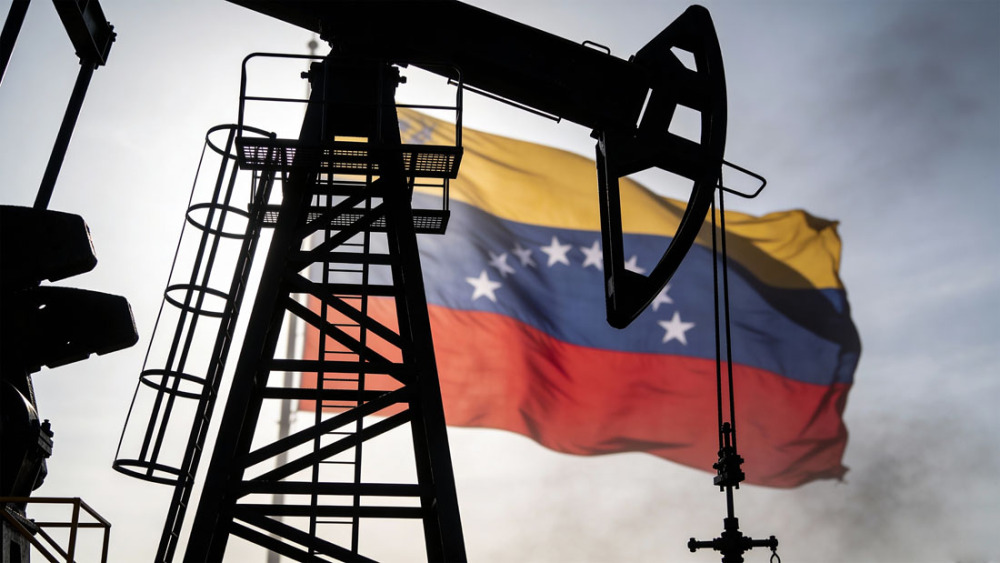 Following the capture of Venezuelan leader Nicolás Maduro by U.S. forces early Saturday, Trump stated, "We're going to have our very large United States oil companies, the biggest anywhere in the world, go in, spend billions of dollars, fix the badly broken infrastructure and start making money for the country."
Reviving Venezuela's energy sector would likely require several years and billions in investments, Kopack said. As of Sunday evening, it remained uncertain where the necessary funds would originate or who would take on the significant risks involved and, in turn, benefit from the potential profits.
So far, none of the major U.S. oil companies have commented on an assertion by the president that they are ready to invest billions in rebuilding Venezuela's oil industry, according to a January 5 report by Lauren Almeida for The Guardian.
However, Ali Moshiri, a former senior executive at Chevron, has announced that he is raising US$2 billion for Venezuelan oil projects, the report said.
Moshiri, who previously led Chevron's Latin American operations, informed the Financial Times that his Amos Global Energy Management fund has pinpointed Venezuelan assets and is gearing up to invest. "We have been anticipating this breakthrough for a while, and our US$2 billion private placement memorandum is ready to go with several investment targets identified," he stated.
More Proven Reserves Than Any Other Country
According to a report by Rachel Rees for the Financial Times on January 5, "Venezuela has more proven crude oil reserves than any other country."
However, due to insufficient investment and a struggling economy, Venezuela exports minimal crude oil, the NBC piece stated. According to estimates by the state-run oil company PDVSA, bringing Venezuela's energy infrastructure back to its 1990s level would necessitate US$8 billion in direct investment, Kopack wrote. Securing these funds is further complicated by the fact that major oil and gas companies have been cutting back on spending for upgrading infrastructure like pipelines and refineries in recent years — a response to declining oil prices.
In 2025, both U.S. crude oil and Brent crude oil experienced their most significant annual declines since 2020. Even before the Trump administration's involvement in Venezuela, Saad Rahim, chief economist at the commodity trading firm Trafigura, forecasted a "super glut" in the oil market, which would likely push oil prices even lower, Kopack said.
A shift in Venezuela's oil exports would primarily impact China, which became the leading importer of Venezuelan crude after Trump imposed sanctions on the country's energy sector in 2019, according to a commentary piece for Reuters by Ron Bousso on January 4.
According to data from analytics firm Kpler, China accounted for over half of Venezuela's crude exports, totaling 768,000 barrels per day last year. Trump indicated on Saturday that China will still receive some Venezuelan oil under a U.S.-backed government in Caracas, but the volume is expected to be limited.
Ultimately, the main direction for Venezuela's crude volumes is evident. The U.S. is a much more natural market than China due to its geographic proximity, which significantly reduces freight costs. If most of the current Venezuelan exports to small Chinese refineries are redirected to the U.S., American imports could increase by more than 200,000 barrels per day within months of this shift, more than doubling U.S. purchases based on 2025 export levels, according to Reuters estimates.
Most Reserves, Production Owned by State
The U.S. action against Venezuelan president Nicolás Maduro has brought renewed attention to one of the world's most politically complex oil sectors, prompting investors to reevaluate who holds control over the country's oil resources and whether these can be effectively revitalized after years of decline, according to a piece by Lee Ying Shan for CNBC on January 4.
For now, the answer might appear clear-cut. "Petróleos de Venezuela (PDVSA), the state-owned oil company, controls the majority of the oil production and reserves," stated Andy Lipow, president of Lipow Oil Associates, according to Shan.
Chevron operates in Venezuela through its own production and a joint venture with PDVSA, while Russian and Chinese companies are also involved through partnerships, though "majority control is still with PDVSA," Lipow noted.
Venezuela nationalized its oil industry in the 1970s, leading to the establishment of PDVSA. Oil production reached a peak of approximately 3.5 million barrels per day in 1997 but has since fallen to an estimated 950,000 barrels per day, with about 550,000 barrels per day being exported, according to data from Lipow Oil Associates, the CNBC piece reported.
Events Could Change Outlooks for Several Cos.
Industry experts have cautioned that any shift in leadership could disrupt the commercial network that keeps Venezuelan oil flowing. "Since it is unclear at this time who is in charge in Venezuela, we might see exports completely halt as the buyers don't know to whom to send the money," said Lipow, according to CNBC.
Lipow anticipates that Chevron will continue exporting 150,000 barrels per day, minimizing any immediate supply disruption. However, he mentioned that the overall uncertainty could introduce a short-term risk premium of about US$3 per barrel.
Venezuela's long-term significance lies in the type of oil it produces, Shan wrote for CNBC. The country's heavy, sour crude can be difficult to extract but is highly valued by complex refineries, especially in the U.S. "American refineries... love to slurp that gunky oil from Venezuela and Canada," McNally remarked. "The real issues are, will the oil industry be able to get back into Venezuela and reverse two decades of dilapidation and neglect and get it back up?"
If a government more aligned with U.S. interests and investment emerges, Chevron would be "best placed" to expand its operations, said Saul Kavonic, head of energy research at MST Financial, according to Shan's CNBC piece. European firms like Repsol and Eni could also gain, given their current presence in Venezuela, he added.
U.S. oil companies saw a significant rise in early trading in New York, as investors anticipated gains from Trump's intentions to revamp Venezuela's oil sector, Rees wrote for Financial Times.
Shares of Chevron, the sole major U.S. oil firm still active in Venezuela, increased by 5%. Oilfield services company Halliburton saw an 8% rise. ConocoPhillips and ExxonMobil — both still pursuing compensation for their Venezuelan assets that were seized in the 2000s — experienced gains of 6% and 2%, respectively.
If opposition leader Maria Corina Machado quickly assumes the presidency, sanctions could be lifted, and oil exports might initially increase as stored oil is sold to generate revenue for those companies, changing the outlooks of all four companies for the better, Lipow suggested.
"The race is on for critical natural resources," wrote Robert Sinn of Goldfinger Capital on January 3. "China has a huge head start, but Trump just fired a powerful shot across the bow. I fully expect the competition for strategic resources between the United States and China will heat up in 2026."
Chevron Corp.
Chevron Corp. (CVX:NYSE) is likely to see a big benefit from any changes, as it still operates in the country, according to a team of Jefferies analysts led by Lloyd Byrne, as reported by Barbara Kollmeyer for MarketWatch on January 5.
 Streetwise Ownership Overview*
"[Chevron's] existing footprint in the country could mean it is best positioned to benefit from more opportunity as they have maintained a license from the U.S. Office of Foreign Assets Control to produce and export crude from existing [Venezuelan] assets since [the fourth quarter of 2022]," stated a team of TD Cowen analysts, including Menno Hulshof and Marc Bianchi. According to the Cowen analysts, Chevron produces 200,000 barrels a day from its joint venture in Venezuela.
Chevron ranks as the second-largest energy company in the United States, following Exxon Mobil. The company oversees investments in its subsidiaries and affiliates, offering administrative, financial, management, and technological support to both U.S. and international subsidiaries involved in fully integrated petroleum, chemicals, and mining operations, as well as power generation and energy services.
It operates in 180 countries and maintains a robust network of retail gas stations under the Chevron, Texaco, and Caltex brands. Additionally, the company is actively pursuing alternative energy solutions.
According to a November 25, 2025, research analysis of the company by Trefis, Chevron reported adjusted earnings of approximately US$3.6 billion, or about US$1.85 per share, for Q3 2025, surpassing analysts' expectations of US$1.68 per share.
The quarter benefited from record production of around 4.1 million barrels of oil equivalent per day — a significant year-over-year increase — primarily driven by the recent acquisition of Hess Corporation. Operating cash flow (excluding working-capital changes) rose nearly 20% year-over-year to about US$9.9 billion, reflecting higher volumes and improved downstream/refining margins.
While upstream earnings declined due to lower commodity prices, the downstream/refining segment experienced a strong profit recovery, helping to offset the weakness, Trefis noted.
"The company reaffirmed US$17–17.5 billion in 2025 capex, including Hess integration spending, while guiding production growth toward the top end of its 6–8% range as Hess assets continue to ramp," the Trefis research report said. "Management is targeting US$2–3 billion in structural cost savings by 2026, with Hess synergies expected to reach US$1.5 billion, helping lower its long-term breakeven to below US$50 Brent for covering capex and dividends."
Longer term, Chevron "projects over 10% annual adjusted free-cash-flow growth through 2030, steady 2–3% production growth, and a capex run-rate of US$18–21 billion, reflecting a strategy that leans on efficient, diversified upstream growth and disciplined reinvestment," Trefis continued.
The research firm set a US$150 per share estimate on the stock, compared to US$150 per share at the time of writing.
According to a Freedom Broker research report by Analyst Sergey Pigarev on November 4, 2025, "The year's key milestone was the closing of the Hess Corp. acquisition in July, which drove CVX's oil and natural gas production to record levels. Share repurchase was maintained at US$2.6 billion for the quarter. In our view, the stock offers limited upside from current levels. We reiterate our US$165 price target and confirm a 'Hold' rating."
The acquisition of the asset "underpinned record operating metrics for the company" and "shareholder returns remain robust," Pigarev wrote.
"At the end of the quarter, the Board maintained the dividend at US$1.71 per share, implying a 4.5% yield at the current share price," the note said. "Chevron spent US$2.6 billion on buybacks during the quarter (flat q/q). Nonetheless, the number of shares outstanding was 12.9% higher than it was in the second quarter due to equity issued for the Hess acquisition."
According to 18 analysts, the average rating for CVX stock is "Buy," the site Stock Analysis noted. The average 12-month stock price target is US$172.33, which is an increase of 4.51% from the latest price.
1Less than 1% of Chevron is held by insiders and management, about 6% by holding companies, and 68% by institutions. The rest is retail.
Top shareholders include The Vanguard Group Inc. with 9.09%, State Street Investment Management with 7.58%, Berkshire Hathaway Inc. with 6.06%, BlackRock Institutional Trust Co. with 4.69%, and Geode Capital Management LLC with 2.16%.
Its market cap is US$313.91 billion with more than 2 billion shares outstanding. It trades in a 52-week range of US$132.04 and US$168.96.
Exxon Mobil Corp.
Even before the military action, legendary resource investor Rick Rule of Rule Investment Media predicted a major opportunity may be opening up in the oil space.
He told Lou Basenese of The Big Skinny on YouTube on November 5, 2025, that on a global basis, the oil sector is "deferring US$2 billion in sustaining capital investments every single day." This will really affect output by 2027-2028, which means higher prices, he said.
"That's arithmetic, not narrative," Rule said at the time. "When it begins to occur, you're going to see prices tighten up … Exxon Mobil Corp. (XOM:NYSE), as an example, is selling at a 40% discount to my NPV (net present value) calculation. And I think the NPV of Exxon doubles or triples in the three- to four-year timeframe. Buying an NPV double at a 40% discount on the biggest and best oil company in the world with a 3.5% dividend, that's my idea of a good time."
A multinational oil and gas company based in Spring, Texas, near Houston, Exxon Mobil is the largest direct successor to John D. Rockefeller's Standard Oil. It was formed in 1999 through the merger of Exxon and Mobil.
According to a report by Khadija Saeed on Techstock2 dated December 22, 2025, the company was in the spotlight as investors considered a "lower-for-longer volatility" oil environment against Exxon's long-term growth strategy, potential shareholder returns, and ongoing project advancements, particularly in Guyana and the Permian Basin.
"One of the most widely discussed macro themes today is the idea that oil's traditional geopolitical risk premium has faded in 2025 — even amid major shocks," Saeed wrote. "Reuters notes that oil volatility has stayed comparatively contained, with prices oscillating in a relatively narrow band for much of the year, supported by supply growth from the U.S., OPEC+, and non-OPEC producers (including Guyana)."
Late last year, Exxon released an updated corporate plan through 2030, and the market is still assessing its implications for XOM valuation and cash returns, the article noted. Exxon now anticipates by 2030: US$25 billion in earnings growth compared to 2024 (on a constant price and margin basis) and US$35 billion in cash flow growth compared to 2024.
"ExxonMobil (XOM), the largest oil and gas company in the U.S., showed negative year-over-year dynamics but exceeded consensus expectations," according to a November 5, 2025, research note by Freedom Broker's Pigarev. "Production growth in Guyana and the U.S. Permian Basin drove operational records. The quarterly dividend was raised by 4% to US$1.03 per share."
Despite challenges in the oil market, Pigarev said the firm does not anticipate a significant correction in XOM shares. A sizable buyback program and a strong dividend yield of 3.7% should continue to support the stock. However, upside potential from current levels remains limited, he said.
"ExxonMobil increased shareholder payouts this quarter, raising the quarterly dividend by 4% to US$1.03 per share," the analyst wrote. "We reaffirm our target price of US$123 per share and maintain a 'Hold' rating," indicating a nearly 8% return on the stock at the time the note was written.
A Trefis research note released on November 25, 2025, stated that for the company, "Cost-cutting progress remains a key pillar, with Exxon on track to exceed US$18 billion in structural savings by 2030. Strategically, management is focused on high-return production growth in the Permian and Guyana, where project execution remains ahead of schedule. With a sub-10% net-debt ratio, Exxon enters 2026 positioned for stable investment, strong cash generation, and continued capital returns." Trefis' estimate for the stock was US$116, compared to US$116 per share when the note was written.
On January 3, John Navin of John Navin's Newsletter noted that the company's chart had "a bullish engulfing new high candlestick just hours before the Venezuela attack" (see chart at left). Also, Exxon "will always be an important player going forward," Kollmeyer quoted the Jefferies analysts as saying in her January 5 piece for MarketWatch.
Stock Analysis noted that according to 20 analysts, the average rating for XOM stock is "Buy." The 12-month stock price target is US$131.05, which is an increase of 4.31% from when they updated the page.
Exxon Mobil has a market cap of US$517.24 billion and a 52-week range of US$97.80 to US$122.68. It has 4.2 billion shares outstanding. Less than 1% of the company is owned by insiders and management and holding companies, and about 67% by institutions.
1Top shareholders include The Vanguard Group Inc. with 10.14%, BlackRock Institutional Trust Co. with 5.24%, State Street Investment Management with 4.9%, Fidelity Management & Research Co. with 2.52%, and Geode Capital Management LLC with 2.28%.
Halliburton Co.
Halliburton Co. (HAL:NYSE) offers upstream drilling and exploration services essential for oil and gas production activities needed by companies like Exxon Mobil and National Oil Companies (NOCs) such as Saudi Aramco to explore, develop, and manage their oil resources, according to a November 14, 2025, research note by Trefis. The company boasts a wide geographical reach, operating in about 80 countries, and supplies products and services for oil and gas exploration, drilling, and post-drilling operations.
The report noted the company's Q3 2025 revenue came in at US$5.6 billion, up about 2% sequentially, driven by stronger North American activity, particularly in U.S. land stimulation, Canada, and Gulf of Mexico wireline services.
Adjusted net income was US$496 million, or US$0.58 per share, while GAAP net income was just US$18 million, or US$0.02 per share, reflecting impairment and restructuring charges. The adjusted operating margin held around 13%, and free cash flow reached US$276 million, with US$250 million in share repurchases during the quarter. International results were mixed, with modest gains in Latin America offset by weakness in the Middle East and Asia.
Chief Executive Officer Jeff Miller forecasted "a 'softer-than-expected' short-to-medium-term oilfield services market and plans to adjust operations, maintenance, and capital allocation to align with demand," the Trefis report noted. "Management emphasized cost discipline and a focus on high-return assets, targeting about US$100 million in quarterly savings and lowering 2026 capital spending to roughly US$1 billion," Trefis noted.
The analysis firm continued, "Halliburton continues its commitment to shareholder returns, with free cash flow outlook of US$1.8–2.0billion for the full year and ongoing cost discipline. The company anticipates relatively flat revenue in Q4 2025 and focuses on maintaining margins above 10%. It remains optimistic about international tender activities, particularly in offshore opportunities extending through 2026. The company plans to continue focusing on international market expansion and enhancing technological capabilities."
Trefis set an estimate for the stock of US$26.63 per share, compared to US$26.93 at the time of writing.
In an October 22, 2025, note, Freedom Broker's Pigarev noted that "weak drilling activity continued to weigh" on the company's performance in Q3 2025.
"We expect these headwinds to persist through the end of 2025 and into 2026," Pigarev wrote. "The company is scaling back operations by writing off equipment and reducing headcount. Additionally, capital expenditures are projected to decline by 30% year-over-year in 2026. We reaffirm our price target of US$32 per share for HAL but downgrade our rating from 'Buy' to 'Hold' following the sharp rise in the stock price after the release of the quarterly results."
Just weeks before the U.S. military operation in Venezuela, Halliburton initiated an unusual lawsuit in an international court, claiming that the Venezuelan government owed them compensation for U.S. sanctions against the country, according to a report by Luke Goldstein and Lucy Dean Stockton for Jacobin on January 5.
Companies with pending claims could now be among the first to benefit from a new Trump-installed Venezuelan government willing to direct the country's funds to corporate plaintiffs. Shortly after the U.S. military operation on January 3, Trump announced that the United States would "run" Venezuela, along with making investments in the country's oil and gas infrastructure and selling state-run oil assets.
Venezuela is currently facing nine pending cases filed by investors and major corporations alleging financial damages related to the nationalization of state industries, international sanctions, and political instability. The country has settled dozens more in recent decades, the Jacobin report said.
These cases are arbitrated within the World Bank's International Centre for Settlement of Investment Disputes, a governing body criticized for prioritizing investors' interests over those of sovereign states, particularly developing nations. In 17% of such cases, the host country has been forced to settle. A U.S.-backed Venezuelan government could settle these cases or fail to adequately defend them in court, using Venezuela's resources to award companies hundreds of millions in damages.
Halliburton's case seeks compensation for approximately US$200 million in losses it allegedly incurred between 2016 and 2020 as it began to wind down operations in the country to comply with U.S. sanctions first imposed in 2005 and intensified in 2017 and 2020.
Halliburton blames Venezuela's domestic instability for these losses and demands that the country now pay up. Such a legal argument is reportedly rare in arbitration courts, and some financial analysts suggest that Halliburton may have anticipated a military operation in Venezuela to install a more favorable government willing to settle the claim.
GOP allies have directly mentioned Halliburton as one of the energy companies that could invest in Venezuela to "rebuild their country" after regime change, as Trump's former U.S. Secretary of State Mike Pompeo told Fox News in December, according to the Jacobin piece.
Halliburton remains one of Jefferies's top picks to help expand and stabilize production in Venezuela, according to the MarketWatch piece by Kollmeyer.
The average rating for HAL stock is "Strong Buy" for 15 analysts catalogued by Stock Analysis. The 12-month average stock price target is US$32, a decrease of 2.77% from when the page was updated.
1Less than 1% of the company is held by insiders, management, and corporations. About 91% is held by institutions. The rest is retail.
Top shareholders include The Vanguard Group Inc. with 12.38%, Capital Research Global Investors with 10.82%, BlackRock Institutional Trust Co. with 6.02%, State Street Investment Management with 5.94%, and Charles Schwab Investment Management with 3.64%.
Its market cap is US$24.91 billion with 841.63 million shares outstanding. It trades in a 52-week range of US$18.72 and US$30.40.
ConocoPhillips
ConocoPhillips (COP:NYSE) is the "world's largest independent exploration and production company, based on proven reserves and production of liquids and natural gas," according to a Trefis report on November 19, 2025.
"After the spin-off of its midstream and downstream businesses into an independent company (Phillips 66), ConocoPhillips has become a pure-play exploration and production company," Trefis said. "The company conducts exploration activities in 19 countries and supplements its income with equity stakes in other oil and gas and chemical companies. About 56% of its production consists of liquids, and about 44% consists of natural gas."
The company reported a strong yet price-challenged Q3 2025, with US$1.7 billion in GAAP earnings (US$1.38 per share) and US$2 billion in adjusted earnings (US$1.61 per share), Trefis said. Although production increased, it couldn't completely counterbalance the significant decline in realized commodity prices.
The company generated US$5.4 billion in operating cash flow, which comfortably covered US$2.9 billion in capital expenditures and supported an 8% dividend increase to US$0.84 per share. Production climbed to 2,399 thousand barrels of oil equivalent per day (MBOED), marking a roughly 4% increase on a like-for-like basis, even as the average realized price fell to US$46.44 from US$54.18 the previous year.
"ConocoPhillips struck an optimistic but disciplined tone with its updated outlook for 2025 and preliminary guidance for 2026," Trefis said. "For FY 2025, the company lifted its full-year production forecast to 2.375 MMBOED while trimming operating-cost guidance to US$10.6 billion, reflecting efficiency gains and solid execution. Management also expects Q4 production between 202.30–2.34 MMBOED and remains on track to reach US$5 billion in asset dispositions by end-2026, having already completed more than US$3 billion this year."
In 2025, COP also completed the acquisition of Marathon Oil, adding high-quality, low-cost supply inventory adjacent to the company's U.S. unconventional position in an all-stock transaction valued at US$22.5 billion. The merger includes US$5.4 billion of net debt.
In a November 10, 2025, updated research note, Pigarev with Freedom Broker noted that the company "reported adjusted EPS for Q3 that exceeded consensus estimates."
"The company increased its share repurchase program to US$1.3 billion and may scale it up to US$2 billion in Q4," Pigarev wrote. "The quarterly dividend was raised by 7.7% to US$0.84 per share. Net debt declined by US$1 billion quarter-over-quarter. COP raised its 2025 production guidance while lowering planned capital expenditures. However, the wave of positive developments does not negate emerging negative trends in the oil market, which could intensify in 2026. We reaffirm our price target for ConocoPhillips shares at US$125 and maintain our 'Buy' rating.
Stock Analysis reported that, according to 19 analysts, the average rating for COP stock is "Buy." The 12-month stock price target is US$114.26, which is an increase of 14.1% from when the page was updated.
Following the military action in Venezuela, COP's outlook stood out for analysts at Citi, who projected an 8% upside for shares if Venezuela settles its long-overdue debt, according to Kollmeyer and MarketWatch. The oil giant was awarded over US$10.5 billion by an international court following the nationalization of Venezuela's oil industry in 2007. To date, ConocoPhillips has recovered US$800 million, and legal proceedings in 2025 could potentially yield another US$1 billion, they noted.
The remaining amount has been valued at nearly zero, given the lack of a clear path to recovery, according to Citi. However, analysts advised caution. Due to the oil industry's "contentious history" with investments in Venezuela, "there would need to be a substantial change in political and fiscal conditions for the industry to re-engage," the Citi analysts warned.
1Less than 1% of the company is owned by insiders and management, holding companies, and corporations. About 84% is held by institutions. The rest is in retail.
Its top shareholders include The Vanguard Group Inc. with 9.65%, State Street Investment Management with 5.3%, BlackRock Institutional Trust Co. with 5.14%, Capital International Investors with 3.69%, and T. Rowe Price Associates Inc. with 3.39%.
Its market cap is US$119.49 billion with 1.2 billion shares outstanding. It trades in a 52-week range of US$79.88 and US$106.20.
| Want to be the first to know about interesting Oil & Gas - Exploration & Production investment ideas? Sign up to receive the FREE Streetwise Reports' newsletter. | Subscribe |
Important Disclosures:
- Steve Sobek wrote this article for Streetwise Reports LLC and provides services to Streetwise Reports as an employee.
- This article does not constitute investment advice and is not a solicitation for any investment. Streetwise Reports does not render general or specific investment advice and the information on Streetwise Reports should not be considered a recommendation to buy or sell any security. Each reader is encouraged to consult with his or her personal financial adviser and perform their own comprehensive investment research. By opening this page, each reader accepts and agrees to Streetwise Reports' terms of use and full legal disclaimer. Streetwise Reports does not endorse or recommend the business, products, services or securities of any company.
For additional disclosures, please click here.
1. Ownership and Share Structure Information
The information listed above was updated on the date this article was published and was compiled from information from the company and various other data providers.