Lithium Prices Surge as 2025 Market Recovery Gains Serious Momentum
View Important Disclosures for this Article
CloseImportant Disclosures:
Atlas Lithium Corp. is a billboard sponsor of Streetwise Reports and pays SWR a monthly sponsorship fee between US$3,000 and US$6,000.
As of the date of this article, officers, contractors, shareholders, and/or employees of Streetwise Reports LLC (including members of their household) own securities of Atlas Lithium Corp.
James Guttman wrote this article for Streetwise Reports LLC and provides services to Streetwise Reports as an employee.
This article does not constitute investment advice and is not a solicitation for any investment. Streetwise Reports does not render general or specific investment advice and the information on Streetwise Reports should not be considered a recommendation to buy or sell any security. Each reader is encouraged to consult with his or her personal financial adviser and perform their own comprehensive investment research. By opening this page, each reader accepts and agrees to Streetwise Reports' terms of use and full legal disclaimer. Streetwise Reports does not endorse or recommend the business, products, services or securities of any company.
The information listed above was updated on the date this article was published and was compiled from information from the company and various other data providers.
Fresh sector analysis shows lithium prices strengthening across the supply chain, with Atlas Lithium Corp. (ATLX:NASDAQ) and Libra Energy Materials (LIBR:CSE; W0R0:FSE) positioned within a rapidly improving market. New data from multiple research groups highlights rising demand, tightening inventories, and expanding opportunities for developers as 2025 closes out.
Recent analysis from multiple industry research groups indicates that the lithium market has been recovering through the second half of 2025, supported by rising prices, improving sentiment, and stronger demand from both electric vehicles and battery energy storage systems. After a prolonged downturn that began in late 2022, several indicators now point to a market that has stabilized and strengthened throughout the year.
According to Sprott in a December 3 commentary published by Kitco Media, lithium prices began stabilizing in June 2025 following an extended decline. Sprott reported that as of November 30, 2025, lithium carbonate had gained 25.73% year to date as inventory drawdowns, regulatory tightening and mine shutdowns in China contributed to firmer pricing. Sprott noted that the rebound was supported by "robust demand growth and ongoing inventory reduction" and highlighted policy actions aimed at preventing producers from selling at unsustainably low prices.
Mining.com contributor Barry FitzGerald wrote on December 4 that lithium prices had strengthened considerably since June, reflecting improved demand from grid-scale battery energy storage systems in addition to EVs. FitzGerald reported that spodumene concentrate prices had risen 64% since June to about US$1135 per ton, while battery-grade lithium carbonate had increased 45% to more than US$13,000 per ton. The report also referenced commentary that global lithium consumption growth had exceeded 30% year to date while supply growth slowed, contributing to a tightening market.
Momentum in the sector continued into early December. Josh Chiat of Mining.com reported on December 3 that lithium carbonate climbed to US$13,201.62 per ton, marking a 16.84% increase for the month. Chiat cited research from Barrenjoey indicating that battery energy storage system demand had played a significant role in sending lithium prices higher. In the same report, spodumene concentrate was up 41% year to date at US$1150 per ton, reflecting broader improvements across key inputs in the lithium supply chain.
Strengthening Indicators From Analysts
Leede Financial Inc. wrote on December 9 that lithium chemical prices remained "firmly in an uptrend" despite modest week-over-week declines. The firm reported a lithium carbonate price of US$12,871 per ton, which was 17% higher than one month earlier and 24% higher year-over-year. Leede also noted that spodumene concentrate prices at US$1,115 per ton were 43% higher than a year earlier, with the conversion spread between concentrate and carbonate holding near US$5,400 per ton. The report described the current spread as encouraging for converters following the lows reached in April 2025.
Leede Financial further highlighted growing demand from the battery energy storage systems market and continued strength in electric vehicle sales through the fourth quarter. These developments contributed to a more constructive pricing environment, alongside inventory normalization and improved confidence across producers and developers. The firm also observed that rising commodity prices corresponded with share price improvements for producers over recent months.
Across all reports, analysts emphasized consistent drivers behind the rebound: stronger electric vehicle demand, rapid adoption of grid-scale battery energy storage, and supply adjustments that included mine suspensions and regulatory changes in China. Sprott additionally pointed to increasing lithium use in data centers, where lithium-ion batteries offer high energy density and long service life. These applications, combined with strategic investments in supply chain security across multiple regions, provided further support for a market that had moved off multi-year lows.
Some Lithium Context and Market Positioning
Lithium's recovery in 2025 reflects a period of stabilization following the significant price volatility that defined the previous three years. Market participants described the current environment as one where inventories have normalized, price declines have reversed, and demand signals remain steady across multiple end-use sectors. This shift allowed the market to transition from a surplus trajectory toward a more balanced position.
Analysts across Sprott, Mining.com, and Leede Financial all described conditions consistent with a rebounding market. While prices remain well below the extreme highs of late 2022, the sustained improvement since mid-2025 underscores a sector that has regained footing. Based on the available data through December, lithium continues to benefit from structural demand tied to electrification and energy storage, supporting a more stable pricing environment as the year concludes.
As lithium prices continue to improve, two companies in the sector could benefit from stronger sentiment. Both have projects that are sensitive to shifts in pricing, and a firmer market often brings renewed attention to companies with established footholds in the lithium space. With confidence returning strongly to the sector, these types of stocks tend to attract more interest from investors watching for signs of a broader recovery.
In a November 17 research note, Heiko Ihle of H.C. Wainwright and Co. highlighted extensive industry engagement in the development process for the Neves project. Ihle stated that four technical site visits in September attracted between 11 and 17 contractors per event and generated more than 2,800 clarification questions from prospective bidders. He wrote that "the competitive bidding process supports disciplined cost outcomes and validates the project's attractiveness," noting that procurement packages tied to electromechanical assembly, mine operations, and internal road engineering accounted for approximately 70% of estimated capital expenditures.
Ihle also referenced the company's August definitive feasibility study, which he said demonstrated strong economics. He wrote, "We remain pleased with the contents and financial projections of Atlas' definitive feasibility study," citing a US$539 million after-tax net present value, a 145% internal rate of return, and an 11-month payback period. The study projected operating costs of US$489 per ton and attributed the cost structure in part to low impurity, near-surface spodumene, and a fully paid-for dense media separation plant already in Brazil. Ihle added that the combination positioned the project competitively within the lithium development landscape.
In a November 24 update, Ihle reaffirmed a Buy rating for Atlas Lithium and assigned a 12-month price target of US$12 per share. He noted that the revised target, though lower than a prior estimate, still implied a return of approximately 175% based on the offering price. Ihle incorporated the company's 28.15% interest in Atlas Critical Minerals Corp. into his valuation and wrote that Atlas Lithium's broader portfolio contributed to long-term optionality beyond the Neves project alone.
Ihle also commented on the company's exploration progress at its Salinas project, located roughly 60 miles north of Neves. He stated that initial drilling confirmed spodumene-rich mineralization near surface and described the area as "a key area of future growth that is mostly ignored by the market thus far." According to his note, Salinas represented an additional source of resource expansion potential and complemented the company's existing land position within Brazil's Lithium Valley.
Financial results also formed part of Ihle's analysis. He reported that Atlas Lithium recorded a third-quarter 2025 net loss of US$8 million, or US$0.35 per share, compared with a US$9.7 million net loss in the same period of 2024. Ihle wrote, "We view current financials as largely immaterial given the transitional nature of the firm," noting that Atlas Lithium was in the development phase and had begun to receive regulatory and operational approvals needed to advance construction.
One of the most significant developments cited by Ihle was the company's receipt of a Portaria de Lavra from Brazil's Ministry of Mines and Energy. This mining concession granted Atlas Lithium full mineral title and the right to begin and maintain mining operations at Neves. Ihle wrote, "We now anticipate near-term production… which may prove to be a major catalyst," and concluded that Atlas Lithium's "low cost status remains a key theme of anticipated operations."
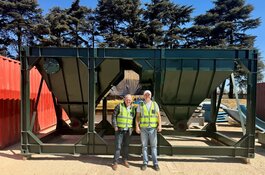
Atlas Lithium reported in its investor presentation that the Neves project carried a projected operating cost of US$489 per ton of lithium concentrate, supported by open-pit mining and a fully paid US$30 million dense media separation plant already delivered to Brazil. The company stated that Neves had an estimated after-tax net present value of US$539 million and an 11-month payback period based on the assumptions outlined in its definitive feasibility study. Over its initial 6.5-year mine life, Neves was expected to produce approximately 950,000 tonnes of spodumene concentrate grading 5.5% lithium oxide.
The company holds 557 square kilometers of mineral rights in Brazil's Lithium Valley, which it reports is the largest exploration footprint in the region. Expansion opportunities include the 100% owned Salinas Project and targets adjacent to existing or recently acquired lithium operations. In addition to its lithium assets, Atlas Lithium maintains a 28% interest in Atlas Critical Minerals, which has exposure to rare earths, graphite, titanium, and uranium projects in Brazil. The company has also executed offtake and equity agreements with Mitsui, Chengxin, and Yahua, each of which committed to acquiring lithium concentrate or equity interests aligned with the Neves development timeline.
1As for ownership and share structure, management owns approximately 24% of Atlas Lithium common shares. Strategic partner Mitsui & Co. Ltd. has 7.94%. Numerous institutions hold ~11%. Retail investors own the rest.
Atlas Lithium has 26.5 million shares outstanding. Its market cap is ~US$100M. Its 52-week range is US$3.54–8.32 per share.
Libra Energy Materials
Libra Energy Materials (LIBR:CSE; W0R0:FSE) is the newest dedicated lithium explorer to go public. Since its go-public in July, Libra has been quietly accumulating prospective projects across the Americas, at an opportune time when lithium projects were selling for pennies on the dollar, growing its portfolio from six projects to thirty-seven with less than 10% dilution. The company continues to advance its projects in Quebec and Brazil, while some of its Ontario assets are supported by an earn-in agreement with Bill Gates-backed AI explorer, KoBold Metals. The KoBold agreement, established in late 2024, provides a multi-year framework for exploration across the Flanders South, Flanders North, and SBC properties, three district-scale land packages within emerging lithium belts. Under the structure, KoBold may earn up to a 75% interest in each project through staged exploration expenditures that may total up to CA$33 million over six years.
The arrangement also includes a technical committee with equal representation from both companies, monthly contract payments to Libra for exploration services, and milestone payments tied to future resource and study achievements at Flanders North and Flanders South. As KoBold completes Stage 1 and Stage 2 thresholds on a project basis, ownership would transition to joint venture status, with Libra retaining exposure through a 49% or 25% stake, depending on the stage reached. The agreement remains the foundation for ongoing exploration planning and property maintenance for these three projects.
The three Ontario properties covered by the agreement host a broad inventory of pegmatite targets identified through early groundwork. At Flanders North, LIDAR and prospecting work in 2023 identified hundreds of LCT-type pegmatites, some up to 200 meters wide. At Flanders South, early sampling confirmed spodumene mineralization at the Homer pegmatite with grades up to 2.86% Li₂O, alongside the Nelson tantalite-bearing pegmatite, which returned assays up to 4,469 ppm Ta₂O₅. Together, the properties cover more than 40,000 hectares across the Quetico Subprovince with access via logging roads and the all-season Flanders Road.
The SBC project, also governed under the KoBold agreement, covers more than 15,000 hectares south of Pickle Lake and features one of the newest spodumene discoveries in Ontario. Libra's 2024 reconnaissance work identified 18 spodumene-bearing outcrops over a 12-kilometer trend, including individual pegmatites up to 30 meters wide and grab samples grading up to 6.64% Li₂O. Only a small percentage of the property has been explored to date, and the discovery earned Libra the 2024 Bernie Schnieders Discovery of the Year Award.
Beyond the earn-in properties, Libra is progressing additional projects in Canada, including Toivo, Nemiscau, Wegucci, and Stimson. Meanwhile in Brazil, the company continues to explore across twenty-one lithium projects, eight graphite projects, and one cobalt-nickel project. These properties were selected based on regional geological trends, historical drill indications, and the presence of wide pegmatite outcrops documented through mapping and government surveys. Current plans focus on LiDAR surveys, prospecting, and reconnaissance mapping to confirm spodumene mineralization ahead of potential drilling programs. This tiered project pipeline positions Libra for continued, year-round field activity and regional targeting across several prolific lithium belts.
Management and the company's top shareholders have also entered into an internal lockup agreement, providing additional alignment and limiting share movement during key stages of Libra's exploration and development work.
134.10% of Libra is held by management and insiders. Of them, David Goodman, Chairman, holds the most at 14.05%. Strategic entities hold 3.76%. The rest is retail.
Libra has 67.27 million shares outstanding, with a market cap of approximately CA$10 million.
Want to be the first to know about interesting Cobalt / Lithium / Manganese investment ideas? Sign up to receive the FREE Streetwise Reports' newsletter.
Atlas Lithium Corp. is a billboard sponsor of Streetwise Reports and pays SWR a monthly sponsorship fee between US$3,000 and US$6,000.
As of the date of this article, officers, contractors, shareholders, and/or employees of Streetwise Reports LLC (including members of their household) own securities of Atlas Lithium Corp.
James Guttman wrote this article for Streetwise Reports LLC and provides services to Streetwise Reports as an employee.
This article does not constitute investment advice and is not a solicitation for any investment. Streetwise Reports does not render general or specific investment advice and the information on Streetwise Reports should not be considered a recommendation to buy or sell any security. Each reader is encouraged to consult with his or her personal financial adviser and perform their own comprehensive investment research. By opening this page, each reader accepts and agrees to Streetwise Reports' terms of use and full legal disclaimer. Streetwise Reports does not endorse or recommend the business, products, services or securities of any company.
The information listed above was updated on the date this article was published and was compiled from information from the company and various other data providers.
Jos Antonio Kast's election signals a sharp policy shift in the world's second-largest copper producer. Rio2 Ltd. (TSX: RIO), Hot Chili Ltd. (ASX: HCH), and Golden Arrow Resources Corp. (TSX-V: GRG) may be directly affected by the new administration's approach to regulation, partnerships, and investment frameworks.
Strategic partnerships completed, robust demand forecasts strengthening, and tightening supply dynamics signal favorable market conditions ahead, while demand uncertainty and production adjustments present near-term considerations. Against this backdrop, Buy-rated Atlas Lithium Corp. (ATLX:NASDAQ) offers 146% upside, according to one analyst.
Atlas Lithium Corp.'s (ATLX:NASDAQ) four site visits, part of its extensive procurement process, attracted numerous prospective contractors, and the company's definitive feasibility study, showing strong economics, caught investors' attention, noted an H.C. Wainwright & Co. report.
The industry improved significantly over the past 18 months, but some challenges persist, experts say. Read on to hear their thoughts and see some public companies working within the jurisdiction.
Atlas Lithium Corp. (ATLX:NASDAQ) reported a strong balance sheet and robust contractor interest as its Neves Project advances in Brazil. With a 145% IRR, key permits in place, and its fully-paid DMS processing plant already manufactured and now ready for assembly, the company is positioned for near-term advancement towards execution.



 Streetwise Ownership Overview*